Pulse storyExplainer
Why Prince George sits in a bowl: the lake that disappeared
Downtown Prince George sits on the floor of a vanished ice-age landscape. How ice, a glacial lake and two rivers made the bowl and cutbanks.
PG Pulse staffPublished 4 min read
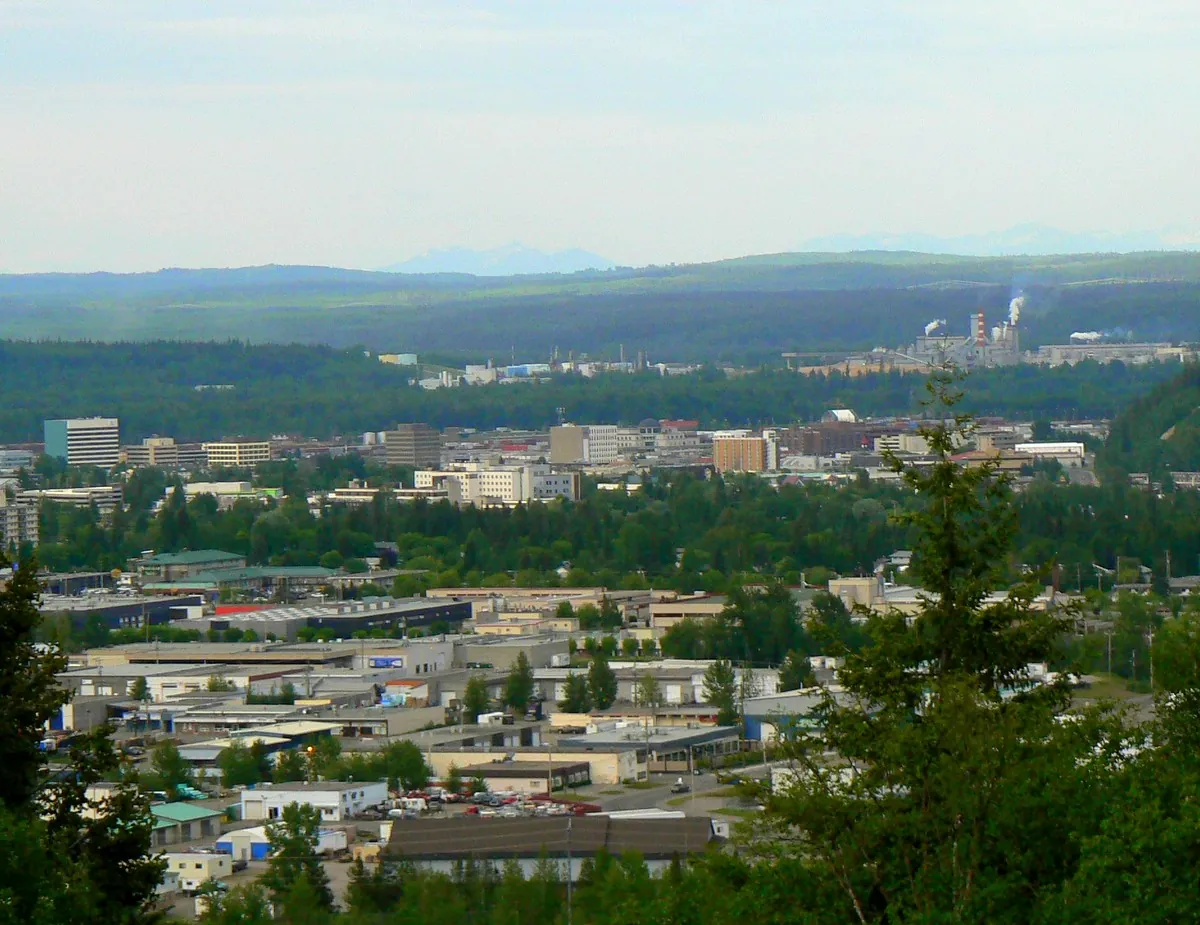
Ask anyone in Prince George where they live and you might hear “in the bowl” or “up the hill.” The phrase is so ordinary that it is easy to forget it describes something remarkable: a city built on the floor of a valley that did not exist at the end of the last ice age.
Here is the short version of how it happened. For the full story, with maps of where to see each clue, read our guide to Glacial Lake Prince George.
Under two kilometres of ice
About 25,000 years ago, at the peak of the last glaciation, the spot where City Hall now stands was buried under ice roughly two kilometres thick. The ice ground over the rolling Nechako Plateau, deepening old river valleys and smearing a layer of mixed rubble, called till, across the land.
Before the ice, the region’s rivers had already carved broad valleys filled with gravel. Some geologists think a much older river system drained this part of the interior north toward today’s Peace River, long before the Fraser took its modern course south to the Pacific.
The big melt
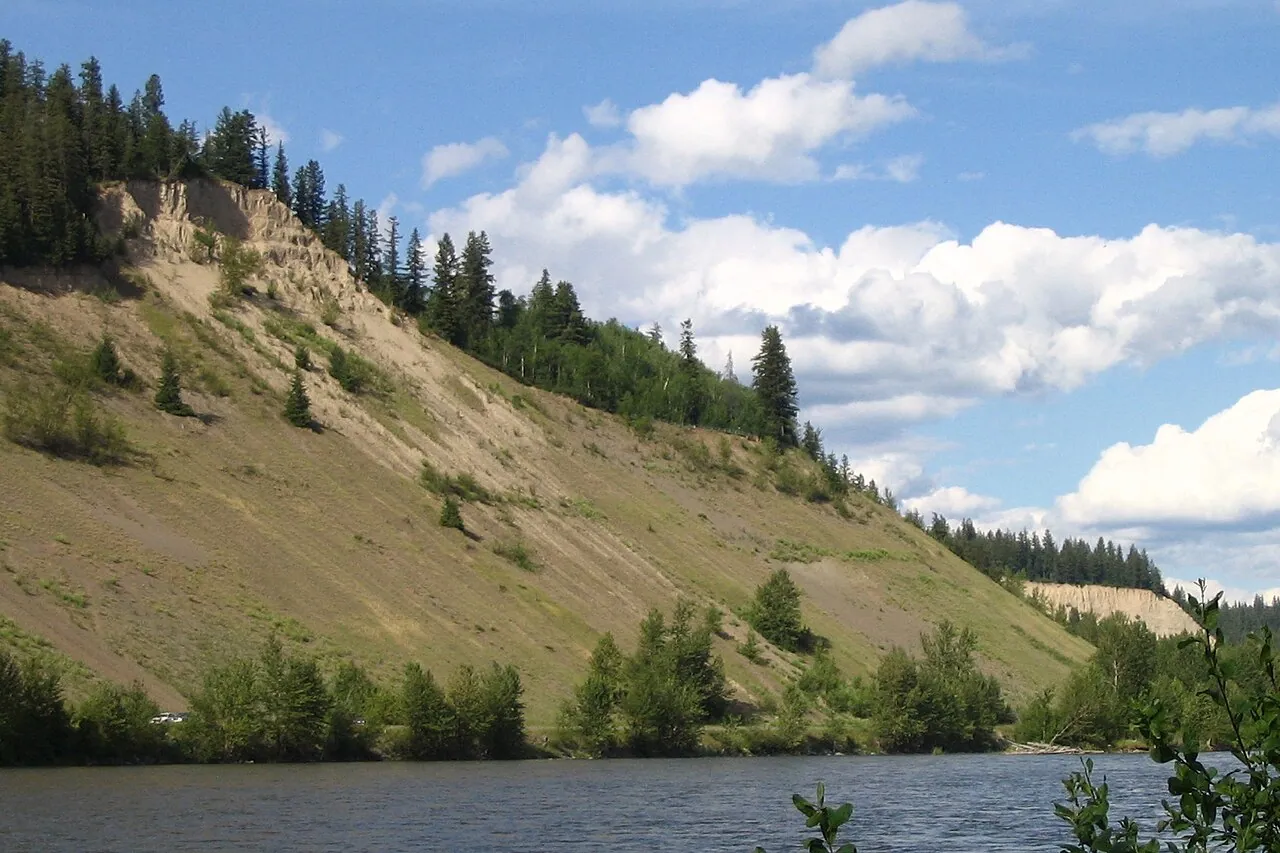
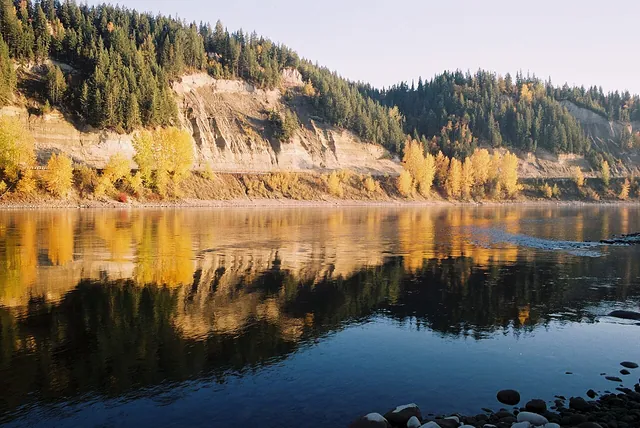
Around 12,000 years ago the climate warmed and the ice sheet began to fall apart. Meltwater poured off the bare land, carrying enormous volumes of sand and gravel into the valleys of the Fraser and the Nechako. Those deposits piled up tens of metres thick. If you have ever looked up at the cutbanks along the Nechako and wondered what they are made of, this is most of the answer: layer upon layer of ice-age sand and gravel.
A lake appears
As the ice retreated, some tongues of it lingered or surged, blocking valleys and damming the meltwater. Water backed up across the lowlands around Prince George and Vanderhoof, forming what geologists call Glacial Lake Prince George.
Lakes are calm places, and calm water lets fine particles settle. Over the life of the lake, silt and very fine sand drifted down and blanketed the bottom. That lake-bed layer is still there. Look carefully at the top of the bluffs across the Fraser from Lheidli T’enneh Memorial Park and you will see a pale band a few metres thick just under the forest. That band is the floor of a lake that has not existed for thousands of years. It is also why the forested land above the bluffs is so strikingly flat.
The lake drains, and the rivers go to work
When the ice dams finally gave way, the lake drained. The Fraser River as we know it took shape, flowing south to the Pacific, and it began cutting down through the loose ice-age fill. The Nechako did the same from the west.
Where the two rivers met, they did more than cut down. They wandered, swinging back and forth across their floodplains and eating away at the sediment on both sides. Over thousands of years, that meandering scooped out a wide, shallow hollow below the level of the old lake floor. That hollow is the bowl.
A staircase you live on
Rivers do not dig in a single, smooth motion. They cut down for a while, pause and build a floodplain, then cut down again. Each pause left a flat terrace stranded above the new river level, creating a staircase of benches.
Many Prince George neighbourhoods sit on those steps:
- Connaught Hill, the flat-topped hill next to downtown, is a leftover chunk of old lake floor and gravel that the rivers flowed around rather than through.
- The Nechako Bench and Edgewood Terrace areas along North Nechako Road sit on former river plains.
- The Otway ski trails lie on a gravel bench above the Nechako.
- Cottonwood Island Park, at river level, is the newest step, still flooded by high water from time to time.
Above all of this, UNBC on Cranbrook Hill and the airport to the southeast sit on the plateau surface the rivers cut into.
Why it still matters
The ice age is not only a story about scenery.
- Water. The thick gravels under the bowl hold the groundwater the city pumps from its wells. Because the city is built directly on top of its water supply, preventing spills really matters.
- Air. A valley traps cold air. On calm winter days, a lid of warmer air can sit over the bowl and hold smoke and emissions near the ground. Check the air quality dashboard during cold snaps.
- Slopes. The cutbanks are made of loose sediment and are still eroding. Enjoy them from a distance and never walk to the edge at the top.
- Building materials. The same deposits are quarried for the sand and gravel that go into local concrete and asphalt.
See it for yourself
The best introduction takes about an hour. Drive up Cranbrook Hill to Forests for the World and walk to the lookout: the whole bowl spreads out below, with the river valleys cutting into the plateau and the Rockies on the horizon on a clear day. Then head down to Lheidli T’enneh Memorial Park and look across the Fraser at the bluffs. Finish on the Heritage River Trail through Cottonwood Island Park for a view of the Nechako cutbanks.
Once you know the story, you will never look at “the bowl” the same way again.
Related: Geography and rivers of Prince George and Five walks along the rivers.
Spotted a mistake? Suggest a correction.
Sources
More Pulse stories
Latest local news
All news-

-
r/princegeorge
Some clarity on the city’s Whistleblower Policy “Drama.”
Opens the publisher’s siteu/Parking_Progress_422
-