Lheidli T’enneh First Nation: people of the confluence
The Lheidli T’enneh, on whose traditional territory Prince George stands: their name, history, the 1913 removal and Lheidli T’enneh Memorial Park.
Updated
At a glance
- In the Nation’s words, Lheidli means ‘The People from the Confluence of the River’ and T’enneh means ‘The People’ in the Carrier language.
- Prince George is built on Lheidli T’enneh traditional territory, where the Nechako meets the Fraser.
- In 1911 the band sold Fort George Reserve No. 1 to the railway; families were moved in 1913 and the old village was burned.
- Fort George Park, site of the old village and cemetery, was renamed Lheidli T’enneh Memorial Park in 2015.
- The Nation was the first official host First Nation of the Canada Winter Games, in Prince George in 2015.
Every land acknowledgement you hear in Prince George begins with the same words: the city stands on the traditional territory of the Lheidli T’enneh. This guide is an introduction to who they are and to a history every resident and visitor should know. For the Nation’s own voice, visit lheidli.ca.
For a timeline, a map of key places, census numbers, services, events and Dakelh words, see our hub page, Lheidli T’enneh territory and Indigenous Prince George.
PG Pulse wrote this introduction from public sources. It does not speak for the Nation. If you see something wrong, email hello@princegeorgepulse.ca.
Who are the Lheidli T’enneh?
The Lheidli T’enneh are part of the Dakelh, or Carrier, peoples of central British Columbia. On its own site, the Nation explains that T’enneh means “The People” and Lheidli means “The People from the Confluence of the River,” referring to how the Nechako River enters the Fraser at Prince George. The City puts it as the people from “where the two rivers flow together.” The Nation names the rivers as the Nee Incha Koh, “river with strong undercurrents,” and the Ltha Koh, the Big Mouth River.
Their traditional language is a dialect of Carrier, a Northern Athabaskan language. The Nation says the language is seeing a resurgence thanks to its Elders, who have contributed to an online Lheidli Dakelh dictionary with audio, school programs and FirstVoices. A few words to start with, from the School District 57 Lheidli Dakelh guide: hadih (hello), mussih (thank you), and Soo bunda (good morning).
Today the Nation has more than 900 members, according to its website, with most living off reserve in Prince George and beyond. Its main community is on the Fort George (Shelley) No. 2 reserve upriver on the Fraser.
Life at the confluence
For thousands of years, Lheidli T’enneh families moved across a large territory through the seasons. The rivers were central: salmon, sturgeon and other fish were caught and dried at camps along the Fraser and Nechako. Moose, caribou and smaller animals were hunted and trapped, and the forest provided berries, medicines and materials.
Trails linked the territory to neighbouring nations. The Lheidli T’enneh knew one low route north toward Summit Lake as Lhedesti, “the shortcut.” In 1863 a Lheidli guide led two prospectors across it, and the route later became known in English as the Giscome Portage.
The fur trade and a new village
When Simon Fraser built the Fort George post in 1807, the Lheidli T’enneh became the post’s trading partners. Over the 1800s, many families settled in a permanent village next to the post near the confluence, where trading and preparing furs was easier. An 1839 count recorded 187 people in the village. In 1883, the Fort George Indian Reserve No. 1 was established around it, covering 1,366 acres.
The railway and the 1913 removal
In 1908, the Grand Trunk Pacific Railway decided the reserve was the ideal place for its station and townsite. What followed was years of pressure from railway agents, federal Indian Affairs officials and speculators.
- In 1910, Chief Louis told officials the people could not agree to give up the reserve. A narrow vote was not accepted as final by the band, and a later vote unanimously rejected a sale.
- The band sent a representative to Ottawa to ask for a far higher price. The request was refused.
- On November 18, 1911, under continued pressure, the band agreed to sell the reserve for $125,000, including money to build new homes and a promise to protect the village cemetery.
- Payments were delayed and the new village was slow to be built. Families moved to the new reserve at Shelley, upriver on the Fraser, in September 1913.
- The old village was then burned so it could not be reoccupied. The local newspaper reported the burning openly at the time.
The Shelley land was far from town and poor for farming, and the community suffered economically for decades. The railway townsite built on the former reserve became downtown Prince George.
Lheidli T’enneh Memorial Park
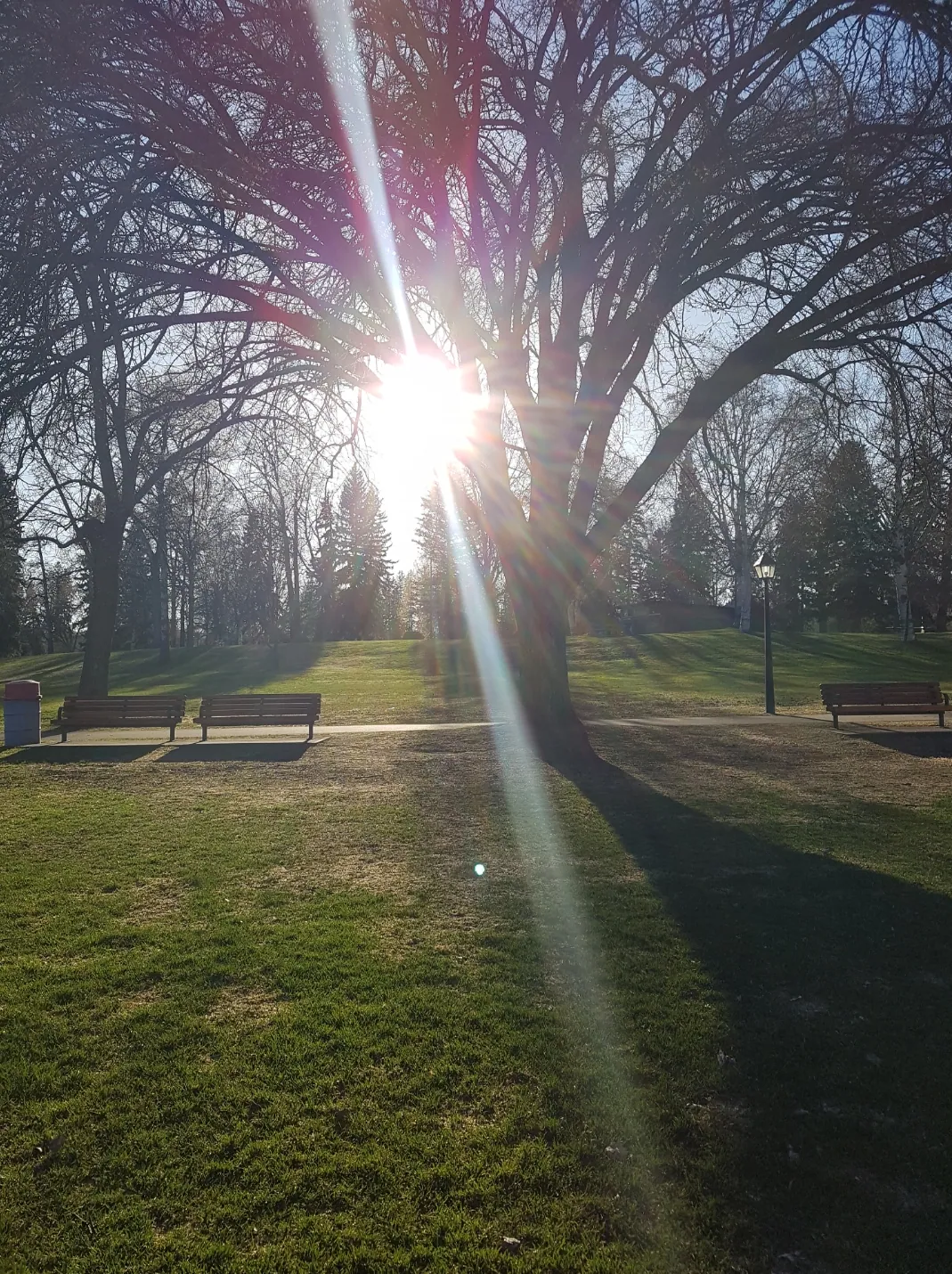
The site of the old village and fur post became Fort George Park, the city’s best-loved riverside park. The village cemetery was set aside as a small reserve inside it. In 2015, the city renamed it Lheidli T’enneh Memorial Park, recognizing whose home it had been. Remains found during construction work in 2017 were a reminder that the burial area is larger than the fenced cemetery.
The park is home to The Exploration Place museum, a stretch of the Heritage River Trail and wide views of the Fraser River’s silt bluffs. Please treat the cemetery and its surroundings as the sacred place it is.
The Lheidli T’enneh today
The Lheidli T’enneh are an active part of the region’s economic and cultural life.
- Treaty talks. On October 29, 2006, the Lheidli T’enneh, BC and Canada initialled the first final agreement reached in the BC treaty process. Members voted it down, 123 to 111, in March 2007. An updated treaty was rejected 185 to 137 in June 2018, and the parties have since pursued other arrangements.
- Land Code. Since its 2000 Land Code, the Nation, not the Indian Act, governs decisions about its reserve lands and resources.
- Leadership. Chief Dolleen Logan was re-elected to a third two-year term in April 2025, with eight councillors.
- Canada Winter Games. When Prince George hosted the 2015 Games, the Lheidli T’enneh were the first official host First Nation in the event’s history.
- Culture. In 2019 the Nation hosted its first potlatch (balhats) in 73 years. It also leads events such as the Moccasin Walk and observances on September 30, the National Day for Truth and Reconciliation.
- Land and business. Its enterprises include contracting and energy projects, and it partners on salmon recovery. At Ancient Forest/Chun T’oh Whudujut east of the city, it works with the province on park planning and an interpretive centre.
Well-known Lheidli T’enneh members include singer-songwriters Kym Gouchie and Marcel Gagnon, and former chief Barry Seymour.
How to show respect as a visitor
- Learn and use the name correctly, and understand what it means. The City’s acknowledgement, in words the Nation presented to Council in 2022, is: “We respectfully acknowledge the unceded ancestral lands of the Lheidli T’enneh, on whose land we live, work and play.” More on acknowledging the land.
- Visit the Lheidli T’enneh and First Nations exhibits at The Exploration Place.
- Walk Lheidli T’enneh Memorial Park quietly near the cemetery.
- Buy art and goods directly from Indigenous artists and businesses.
- Take part in public events on the National Day for Truth and Reconciliation.
Related guides
Common questions
Is Prince George on Lheidli T’enneh territory?
Yes. The city, including downtown and Lheidli T’enneh Memorial Park, is on the traditional territory of the Lheidli T’enneh, whose homeland centres on the confluence of the Nechako and Fraser rivers.
What does Lheidli T’enneh mean?
The Nation explains that T’enneh means ‘The People’ and Lheidli means ‘The People from the Confluence of the River,’ referring to where the Nechako River enters the Fraser at Prince George.
What happened to the Lheidli T’enneh village in Prince George?
The Grand Trunk Pacific Railway wanted the Fort George reserve for its townsite. After years of pressure the band agreed to a sale in November 1911. Families were moved in 1913 to a reserve at Shelley, and the old village was burned so it could not be reoccupied. The cemetery was kept and is now within Lheidli T’enneh Memorial Park.
How can visitors learn about Lheidli T’enneh culture?
Visit the exhibits at The Exploration Place in Lheidli T’enneh Memorial Park, walk the park respectfully, and visit Ancient Forest/Chun T’oh Whudujut Park east of the city, which is on Lheidli T’enneh territory and planned with the Nation.
Sources
- Lheidli T'enneh First Nation official website
- Lheidli T'enneh Band (Wikipedia)
- Prince George, British Columbia (Wikipedia)
- Giscome Portage (Wikipedia)
- Ancient Forest/Chun T'oh Whudujut Park (BC Parks)
- Lheidli T'enneh First Nation: Our story
- Lheidli T'enneh First Nation: Our language
- Lheidli T'enneh First Nation: Lands
- City of Prince George: Lheidli T'enneh First Nation
- City of Prince George: Lheidli T'enneh presents territorial acknowledgement plaque to City (2022)
- BC Treaty Commission: Lheidli T'enneh Treaty
- CFJC Today: PG First Nation turn down treaty (June 25, 2018)
- School District 57: Dakelh phrases (Lheidli)