Explore Prince George: history, geography and neighbourhoods
The story of Prince George: Lheidli T’enneh territory, the fur trade and railway boom, the old glacial lake, the two rivers and every neighbourhood.
Prince George in brief
How many people live here depends on the boundary: the city itself, the built-up area, the commuting area or the whole regional district. Every figure says which one, and when.
- Population estimateStatistics Canada, table 17-10-015585,944 peopleCity of Prince GeorgeAs of
- Population estimate (BC Stats)BC Stats, P.E.O.P.L.E.85,950 peopleCity of Prince GeorgeAs of
- 2021 Census countStatistics Canada, Census Profile76,708 peopleCity of Prince GeorgeAs of
- 2021 Census countStatistics Canada, Census Profile89,490 peoplePrince George census agglomerationAs of
- 2021 Census countStatistics Canada, Census Profile67,339 peoplePrince George population centreAs of
- 2021 Census countStatistics Canada, Census Profile96,979 peopleRegional District of Fraser-Fort GeorgeAs of
- Population estimate (BC Stats)BC Stats, P.E.O.P.L.E.107,639 peopleRegional District of Fraser-Fort GeorgeAs of
- Projected population, 2046Projection · BC Stats, P.E.O.P.L.E. projection89,089 peopleCity of Prince GeorgeAs of
- Median age
- 38.8
- City of Prince George,
- Land area
- 316.7 km²
- City of Prince George,
- Indigenous identity
- 15.3%
- City of Prince George,
- Immigrants (born outside Canada)
- 10.3%
- City of Prince George,
- Visible minority
- 11.6%
- City of Prince George,
- No religion
- 59.5%
- City of Prince George,
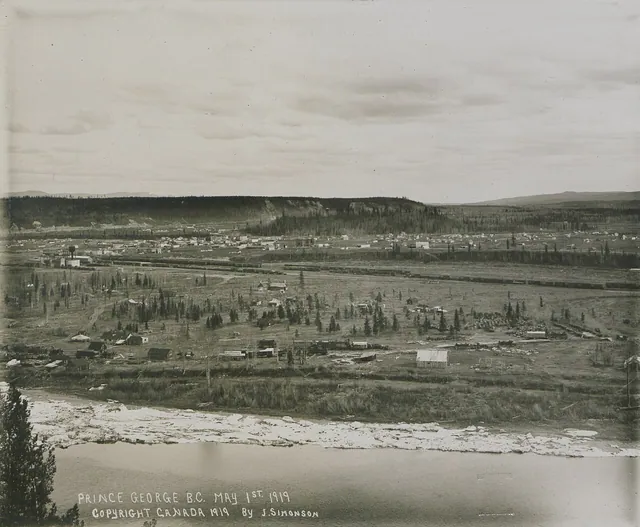
History of Prince George, BC
A timeline of Prince George history, from the Lheidli T’enneh homeland at the confluence to a fur post, a railway boomtown and a northern capital.
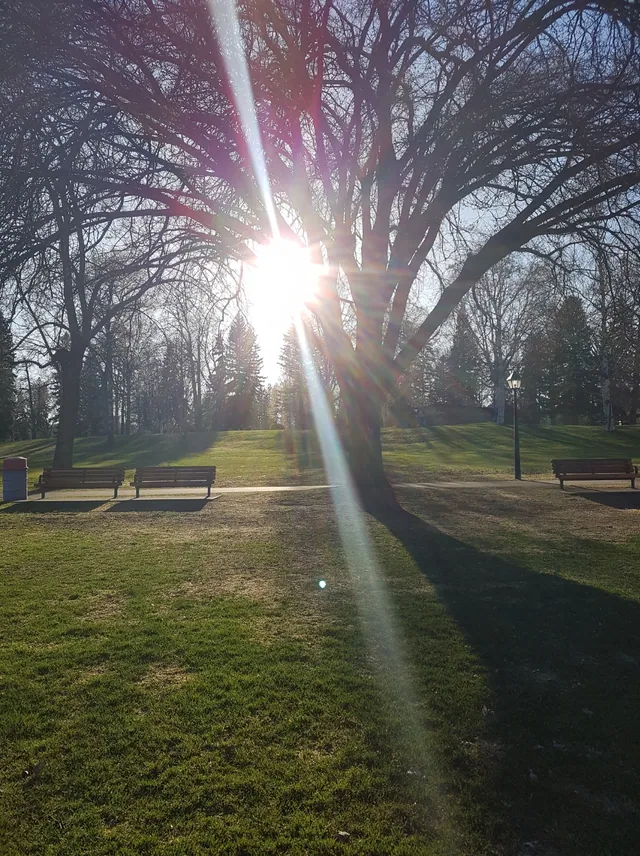
Lheidli T’enneh First Nation: people of the confluence
The Lheidli T’enneh, on whose traditional territory Prince George stands: their name, history, the 1913 removal and Lheidli T’enneh Memorial Park.
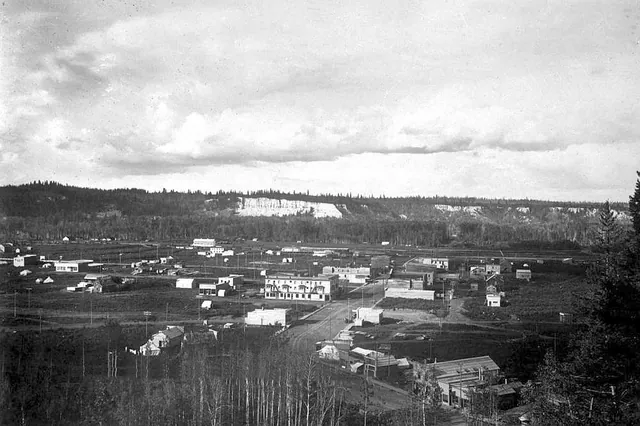
Fort George and the railway boom: how Prince George began
Simon Fraser’s 1807 fur post, the South Fort George and Fort George rivalry, the Grand Trunk Pacific’s 1914 arrival and 1915 incorporation.
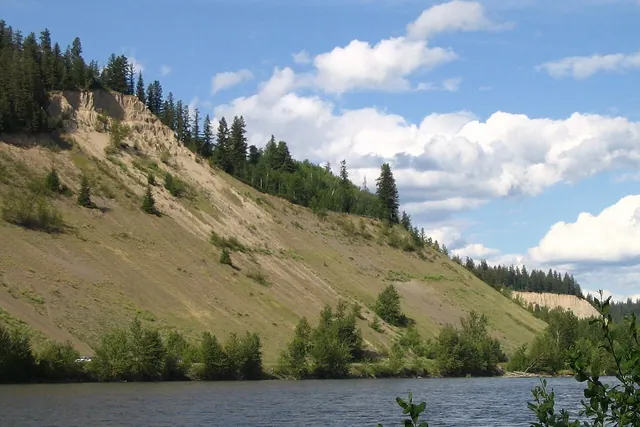
Glacial Lake Prince George: why the city sits in a bowl
How ice sheets, a vanished glacial lake and two rivers carved the Prince George bowl, its silt cutbanks and the benches the city is built on.
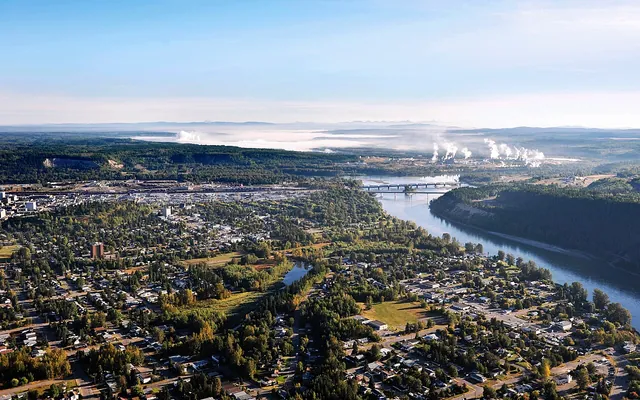
Geography of Prince George: rivers, plateau and forest
Where Prince George sits: the Fraser–Nechako confluence, the Interior Plateau, sub-boreal spruce forest, Tabor Mountain, lakes and the Arctic divide.
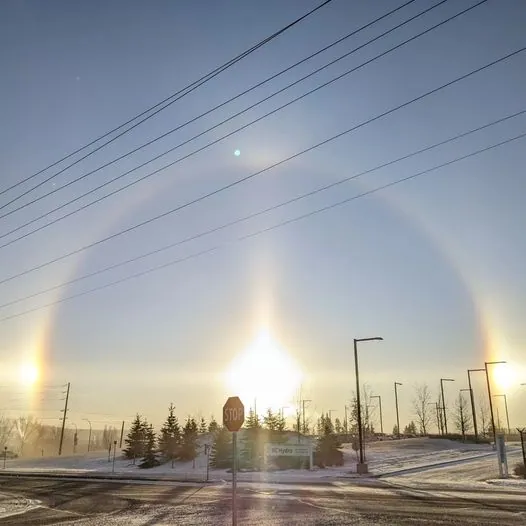
Prince George climate: weather by month, records and normals
Prince George climate normals for 1991–2020: monthly highs and lows, snowfall, rain, sunshine and record temperatures, plus tips for every season.
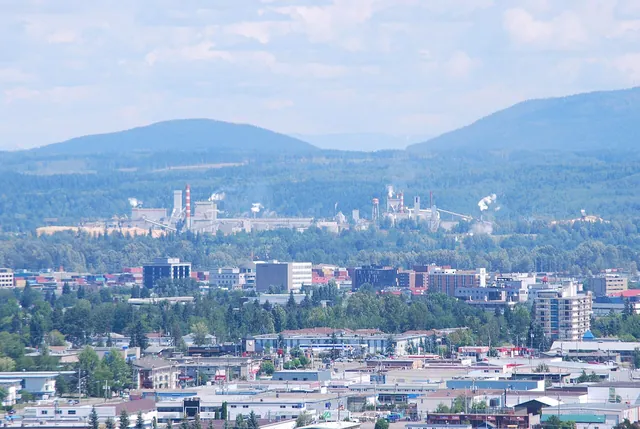
Prince George neighbourhoods: a guide to the city’s areas
A guide to Prince George neighbourhoods: Downtown, the Crescents, the VLA, College Heights, the Hart, South Fort George, Miworth and Blackburn.
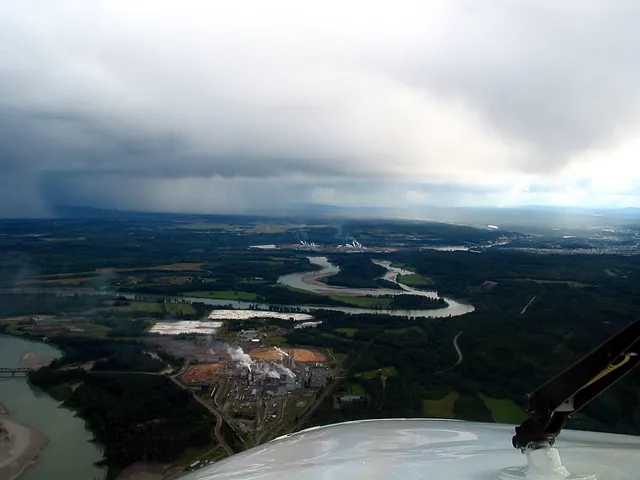
Prince George economy: forestry, rail, health and education
How Prince George makes a living: forestry and pulp, the CN rail hub, YXS airport, health care, UNBC and CNC, mining services and northern supply.

Sports and notable people in Prince George, BC
Cougars and Spruce Kings hockey, the 2015 Canada Winter Games, the CN Centre, Nordic skiing and notable people with roots in Prince George.

Arts and culture in Prince George, BC
Prince George galleries, museums, theatre, music and festivals: Two Rivers Gallery, The Exploration Place, Theatre NorthWest, the symphony, Coldsnap.
A short timeline
Time immemorial
The Lheidli T’enneh, “the people from where the two rivers flow together”, live at the confluence of the Nechako and Fraser.
1807
Simon Fraser of the North West Company builds Fort George, a fur trade post, near the confluence.
1913
The Lheidli T’enneh are removed from the Fort George reserve as the railway townsite is laid out.
1914
The Grand Trunk Pacific Railway reaches the new townsite, settling the rivalry between the three “Georges”.
1915
The City of Prince George is incorporated.
1952
The John Hart Highway opens north to Dawson Creek, making Prince George the crossroads of the north.
1960s
Three pulp mills open and the city becomes the capital of BC’s northern forest industry.
1994
The University of Northern British Columbia opens its Prince George campus.
2015
Prince George hosts the Canada Winter Games.