Lheidli T'enneh territory
Lheidli T'enneh territory and Indigenous Prince George
Prince George is built on the unceded land of the Lheidli T'enneh, the people of the confluence. Here is who they are, how to acknowledge the land, the history every resident should know, and where to find Indigenous services, events and language.
Today is the National Day for Truth and Reconciliation
Lheidli T'enneh Memorial Park, from noon: a guided Reconciliation Walk and a reading of the 94 Calls to Action, then a ceremony at 2 p.m. with a drum-in for Survivors. Wear orange. Details from the Nation
PG Pulse compiled this page from public sources, linked throughout. It does not speak for the Lheidli T'enneh or any other Nation. For anything official, go to lheidli.ca. Corrections are welcome.
Whose land is this?
The Lheidli T'enneh are a sub-group of the Dakelh (Carrier) people. Their traditional territory includes the city of Prince George and, in the City's words, much of the area from here to the Rocky Mountains. They were historically known as the Fort George Indian Band.
- Lheidli
- “The People from the Confluence of the River,” referring to how the Nechako River enters the Fraser at Prince George Source
- T'enneh
- “The People” Source
The City describes the name as the people from “where the two rivers flow together.” Treaty talks never concluded, so the territory remains unceded. Chief Dolleen Logan and eight councillors were elected in April 2025. Chief and Council
- 900+Nation membersThe Nation's website; Wikipedia lists 928 in 2025, most living off reserveSource
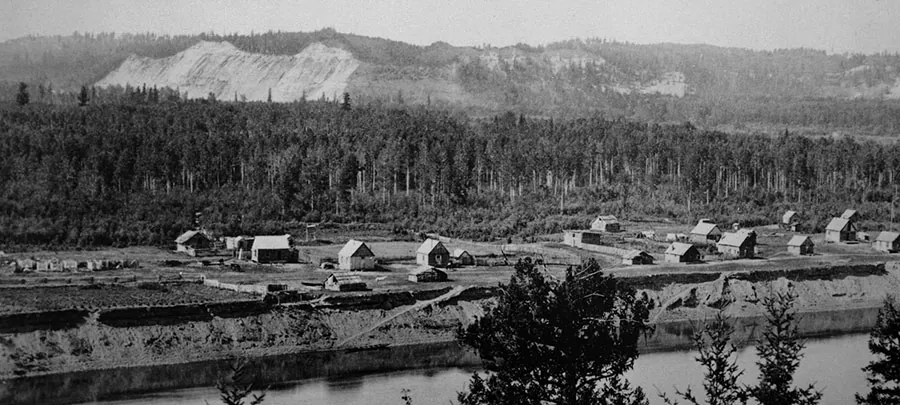
- 1807Fort George post builtThe Lheidli village beside the post grew into a permanent settlementSource
- 1913Families moved to ShelleyThe old village was burned so it could not be reoccupiedSource
- 2000Land CodeThe Nation, not the Indian Act, governs its reserve landsSource
- 2 votesTreaty declinedMembers voted down final agreements in 2007 and 2018Source
- 2015Memorial Park renamedFort George Park became Lheidli T'enneh Memorial ParkSource
Acknowledging the land
The Lheidli T'enneh gave the City its own words for this. Start there, say it sincerely, and add something real.
The acknowledgement presented by the Nation
We respectfully acknowledge the unceded ancestral lands of the Lheidli T'enneh, on whose land we live, work and play.
In Dakelh: School District 57's acknowledgement
Lheidli T'enneh hubeh keyoh whuts'odelhti.School District 57 - Prince George respectfully acknowledge it is on the traditional and unceded territory of the Lheidli T'enneh.
Know why you are saying it
An acknowledgement recognizes that Prince George is on Lheidli T’enneh land that was never surrendered by treaty. It is a starting point for a relationship, not a formality.
Use the Nation’s own words
The wording the Lheidli T’enneh presented to the City is a respectful default. Say the name carefully: learn it from the Nation or the dictionary audio before you speak.
Make it specific
Say what the land means to your group, what you have learned, or what you are doing: a partnership, a hiring commitment, buying from Indigenous businesses, supporting language work.
Host says it, at the start
The City’s practice is for the host to open meetings and events with it. Online, acknowledge the territory you are personally on.
Welcomes are different
A welcome to the territory is given by Lheidli T’enneh people themselves. If you want one for your event, contact the Nation directly and offer honoraria.
The first three tips and the last are PG Pulse's suggestions, not guidance from the Nation. The fourth follows the City's published practice.
From the confluence to today
Time immemorial
The people of the confluence
Lheidli T’enneh families live and travel across a territory reaching from the Prince George area toward the Rocky Mountains, with the rivers at its heart. Source
1807
Fort George trading post
Simon Fraser builds the Fort George fur trading post near the confluence. The Lheidli T’enneh become its trading partners, and many families settle in a village beside it. Source
1839
A village of 187 people
A count records 187 people living in the Lheidli village near the post. Source
1863
The shortcut north
A Lheidli guide leads prospectors over a low trail toward Summit Lake. The route later becomes known in English as the Giscome Portage. Source
1883
Fort George Indian Reserve No. 1
The reserve is set aside around the village at the confluence. Its footprint later becomes the land the railway wanted. Source
1911
Reserve sold under pressure
After years of pressure from the Grand Trunk Pacific Railway and federal officials, the band agrees on November 18 to sell Reserve No. 1 for $125,000. Source
1913
Moved to Shelley; village burned
Families move to the new reserve at Shelley in September. The old village is burned so it cannot be reoccupied. The cemetery remains, now within Memorial Park. Source
1915
City of Prince George incorporated
The new city is incorporated on March 6, following the borders of the land acquired by the railway. Source
1922–1976
Lejac Residential School
The residential school at Fraser Lake, west of Prince George, operates for 54 years. Most students are Carrier (Dakelh) children. Source
1999
First Nations land management
Lheidli T’enneh is one of 14 First Nations party to the Framework Agreement on First Nation Land Management, which Canada ratifies through the First Nations Land Management Act on June 17, 1999. Source
2000
Lheidli T’enneh Land Code
The Land Code gives the Nation jurisdiction over decisions about its reserve lands and natural resources, in place of the Indian Act land rules. Source
2006
First final agreement in the BC treaty process
On October 29, the Lheidli T’enneh, BC and Canada initial the first final agreement reached under the BC treaty process. Source
2007
Members vote no
On March 30, members reject the treaty, 123 votes to 111. Source
2015
Host Nation; the park is renamed
The Lheidli T’enneh are the Official Host First Nation of the Canada Winter Games in Prince George, and Fort George Park becomes Lheidli T’enneh Memorial Park. Source
2016
Ancient Forest/Chun T’oh Whudujut
The rainforest east of the city, on Lheidli T’enneh territory, becomes a provincial park on May 19. Source
2016–17
Reconciliation Framework and MOU
City Council adopts a Reconciliation Framework on June 21, 2016. A year later the Nation, City and Regional District sign a Memorandum of Understanding on Cooperation and Communication. Source
2018
Second treaty vote
An updated treaty is initialled in May. After five weeks of voting, members reject it in June, 185 votes to 137. The parties have since pursued other arrangements. Source
2018
Memorial Park pavilion opens
The pavilion opens with four days of public events, June 21 to 24, drawing about 2,500 people. Source
2019
First potlatch in 73 years
In November the Lheidli T’enneh host their first potlatch (balhats) in 73 years. Source
2022
Territorial acknowledgement plaque
Chief and Council present the City with its acknowledgement, in English and Dakelh. Source
2024
MOU renewed
The Nation, City and Regional District sign an updated MOU on June 21. Source
2025
Chief Logan re-elected
On April 9, Chief Dolleen Logan is elected to a third two-year term with eight councillors. Source
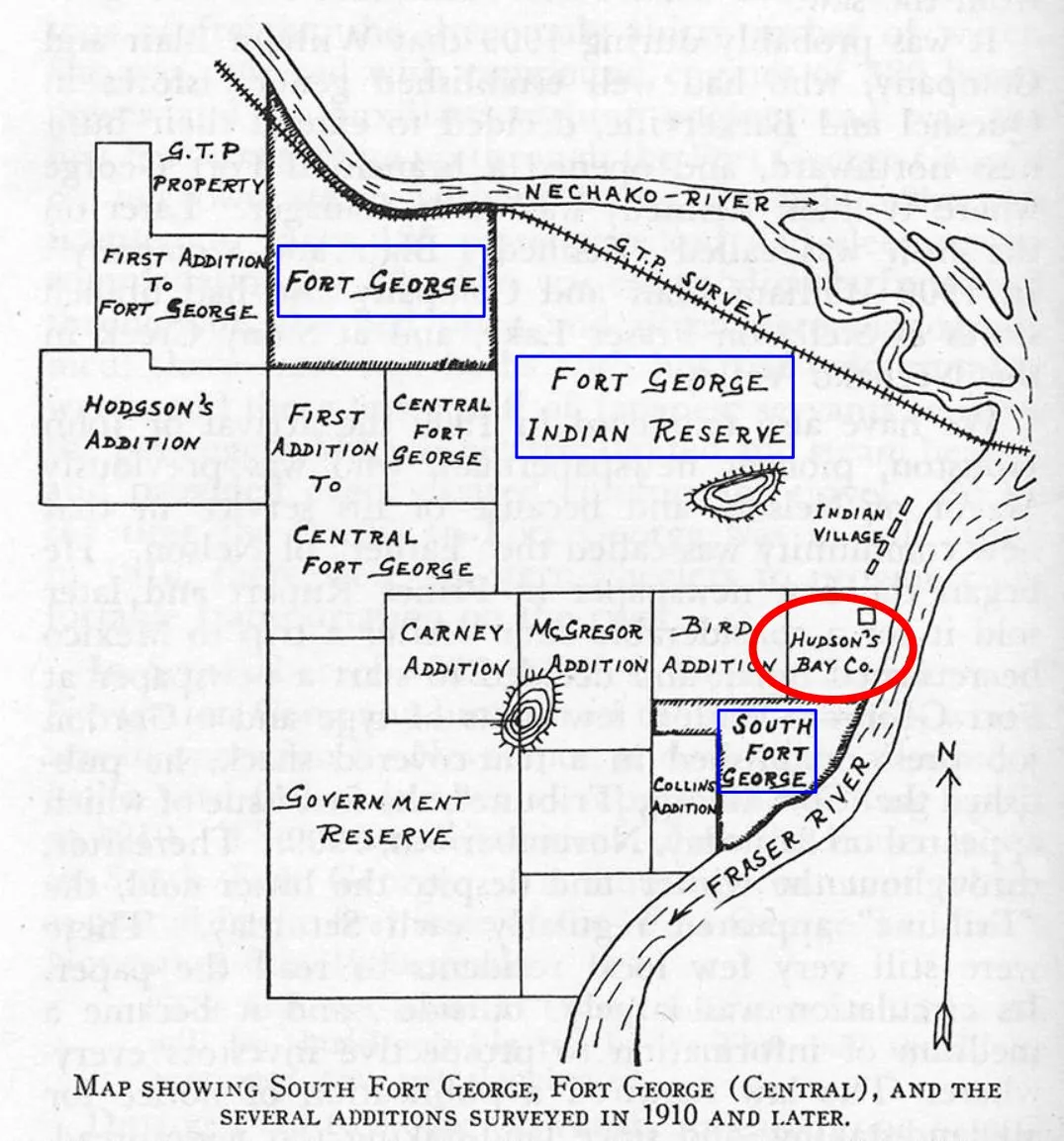
Read the full story of the reserve sale and removal in our guide, Lheidli T'enneh First Nation: People of the Confluence.
Places to know
The confluence, the site of the old village, the community at Shelley, and the schools and services where Indigenous people in Prince George gather and get support.
Tap a marker for details. Map data © OpenStreetMap contributors. Pins mark street addresses or named features from OpenStreetMap.
Indigenous Prince George by the numbers
In the 2021 census, 11,470 people in Prince George identified as Indigenous: 15.3% of residents, about 2.6 times the share across BC.
Indigenous identity
11,470
15.3% of Prince George
5.9% of BC
First Nations
6,620
8.8% of Prince George
3.7% of BC
Métis
4,395
5.8% of Prince George
2.0% of BC
Inuk (Inuit)
70
0.1% of Prince George
0.0% of BC
Share of the population with Indigenous identity
Prince George15.3%
British Columbia5.9%
- First Nations
- Métis
- Inuit, multiple and other Indigenous responses
Scale runs 0 to 16%. Statistics Canada, 2021 Census of Population, 25% sample data for people in private households; counts are rounded. Census counts are self-identified and are not Nation membership figures. Census Profile · More on the people dashboard
Neighbouring Nations
Prince George is a gathering place and service hub for First Nations across the north. Many Dakelh Nations to the west belong to the Carrier Sekani Tribal Council, headquartered downtown. To the north are the Tse'Khene, “People of the Rocks,” at McLeod Lake.
- Lheidli T'enneh First NationPrince George, at the confluenceDakelh
- Saik'uz First NationNear VanderhoofCSTC member
- Nadleh Whut'enFraser Lake areaCSTC member
- Stellat'en First NationFraser LakeCSTC member
- Takla NationTakla Lake, north of Fort St. JamesCSTC member
- Ts'il Kaz Koh (Burns Lake Band)Burns LakeCSTC member
- Wet'suwet'en First NationNear Burns LakeCSTC member
- Nak'azdli Whut'enFort St. JamesDakelh
- Tl'azt'en NationStuart and Trembleur lakesDakelh
- Lhtako Dene NationQuesnelDakelh
- Nazko First NationWest of QuesnelDakelh
- McLeod Lake Indian Band (Tse'Khene)McLeod Lake, about 150 km north on Highway 97Treaty 8 (adhered 2000)
- Simpcw First NationNorth Thompson; territory includes McBride and ValemountSecwépemc
CSTC members as listed by CSTC; McLeod Lake details from MLIB. Links go to each Nation's website, or to the Province's First Nations listing where we could not confirm one.
Support and services
Need to talk now?
Free and confidential. In an emergency, call 911.
- 1-800-721-0066Indian Residential School Survivors Society crisis line24 hours, BC. For Survivors and their families.Website
- 1-866-925-4419National Indian Residential School Crisis Line24 hours, Canada-wide, free. For former students and their families.Website
- 1-800-588-8717KUU-US Crisis Line24 hours, BC-wide Indigenous crisis and support line for all ages.Website
- 1-855-242-3310Hope for Wellness Help Line24 hours, for all Indigenous people in Canada. Online chat too.Website
- 9-8-8Suicide Crisis HelplineCall or text, 24 hours, anywhere in Canada.Website
Nations and governments
- Lheidli T'enneh First Nation
Chief and Council, lands, community services, Elders Society and Tano T’enneh Enterprises.
250-562-0847150 Brunswick Street
- Carrier Sekani Tribal Council
Support and negotiations for six member Nations.
250-562-6279Suite 200, 1460 6th Avenue
- Prince George Métis Community Association
A Métis Nation BC chartered community serving Métis people in Prince George.
Health and wellness
- Soonats'ooneh Community Health Centre
Primary care, specialists, cultural services and HIV/HCV support.
250-564-4422365 George Street
- Carrier Sekani Family Services
Mental wellness, child and family, youth, employment and primary care (Yu Be-yah clinic, 250-564-5414).
250-562-3591987 4th Avenue
- First Nations Health Authority
Province-wide health services and benefits for First Nations people in BC.
- Northern Health Indigenous Health
Indigenous health resources and liaison services across the north.
Community and family
- Prince George Native Friendship Centre
Child care, supportive housing, employment and training, youth, health, Elder services and shelter.
250-564-35681600 Third Avenue
Education
- UNBC First Nations Centre
Student support, cultural programming and Elder connections. Mon to Fri, 8:30 to 4:30.
3333 University Way
- CNC Aboriginal Resource Centre
Advising, tutoring, cultural supports, study space. Mon to Fri, 8 to 4.
236-601-0907Room 1-773, Prince George campus
- Nusdeh Yoh Elementary
SD57 Indigenous choice school, K to 7.
250-562-72012579 Victoria Street
Housing
- Aboriginal Housing Society of Prince George
Affordable housing for Indigenous people of all ages and incomes; online applications and tenant support.
250-564-97941919 17th Avenue
Legal help
- Prince George Indigenous Justice Centre
Free legal advice and representation for criminal and child protection matters, whether or not you qualify for legal aid.
250-645-5519511 George Street
- BC First Nations Justice Council
Toll-free line for criminal and child protection matters: 1-866-786-0081.
- Legal Aid BC
Free legal help if you qualify. Call centre outside Greater Vancouver.
Phone numbers and addresses checked against each organization’s website on September 30, 2026. Call ahead: hours and programs change.
Gatherings through the year
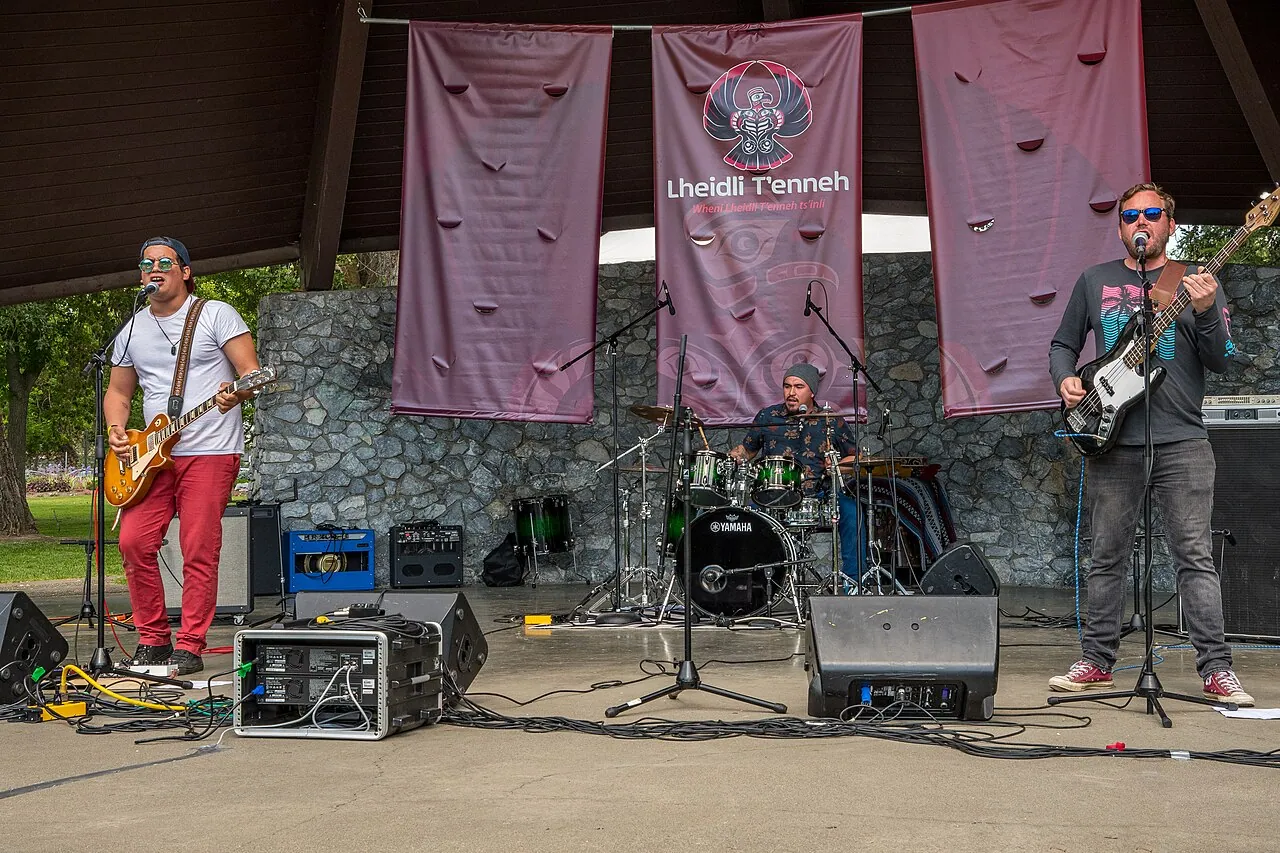
- Sep30National Day for Truth and ReconciliationSeptember 30 · Lheidli T'enneh Memorial ParkHonours residential school Survivors and the children who never came home. In 2026, from noon: a guided Reconciliation Walk through the traditional burial site, a reading of the 94 Calls to Action, then a 2 p.m. ceremony with a drum-in for Survivors. Wear orange. Details
- Jun21National Indigenous Peoples DayJune 21 · Lheidli T'enneh Memorial ParkA free day of artisans, musicians, drummers, dancers, food and family activities on the summer solstice. In 2026 it ran 10 a.m. to 5 p.m. with a free shuttle from City Hall. Details
- Jul11Moccasin WalkJuly (2026: July 11) · Prince GeorgeA community walk with 8.7 km and 4 km routes. All proceeds go to the Lheidli T’enneh Elders Society. Details
September 30 has been a federal day of observance since 2021 and a BC statutory holiday since 2023. It grew out of Orange Shirt Day, begun in 2013 after Survivor Phyllis Webstad shared her story in Williams Lake. Background · Current Lheidli T'enneh events · All Prince George events
A few words in Dakelh
Carrier is a Northern Athabaskan language, and the Nation says it is seeing a resurgence thanks to its Elders. These words come from the Nation and the School District 57 Lheidli Dakelh guide. Listen to speakers in the dictionary before you try them out loud.
- hadihHelloSource: SD57 Lheidli Dakelh guide
- mussihThank youSource: SD57 Lheidli Dakelh guide
- mussichoThank you very muchSource: SD57 Lheidli Dakelh guide
- Soo bundaGood morningSource: SD57 Lheidli Dakelh guide
- danint'ohHow are you?To one personSource: SD57 Lheidli Dakelh guide
- Soo'nust'ohI am well, fineSource: SD57 Lheidli Dakelh guide
- nanyoost'enSee you laterTo one personSource: SD57 Lheidli Dakelh guide
- 'ootasjus̲I am going to fishSource: lheidli.ca
- Nee Incha KohRiver with strong undercurrentsOne of the two rivers named on the Nation’s siteSource: lheidli.ca
- Ltha KohThe Big Mouth RiverThe other river named on the Nation’s siteSource: lheidli.ca
- TanotenPeople a little to the northA name others used for the Lheidli T’ennehSource: lheidli.ca
- 'Utsiyan inké 'UtsooName of the Lheidli T’enneh Elders SocietySource: lheidli.ca
Learn more
From the Nation
Local government and partners
Truth and reconciliation
Help us get this right
If you are a member of the Lheidli T'enneh or another Nation, or work with an organization listed here, and something is wrong, missing, or should not be shared, please tell us. We will correct it quickly and defer to the Nation’s own guidance.
Email hello@princegeorgepulse.ca
Last checked September 30, 2026.